
Social Media Marketing
How We Create a Winning Social Media Marketing Strategy for Your Business

Sep
Social media is no longer just a platform for sharing photos and catching up with friends. It has transformed into a powerful marketing tool that can elevate your business. With billions of users actively engaged across various platforms, the potential for reaching your target audience is immense.
But how do you navigate this dynamic landscape? Crafting an effective social media marketing strategy tailored to your unique needs is critical.
Join us as we delve into the essential steps to help you create a winning social media marketing strategy designed specifically for your business success.
The Importance of Social Media Marketing for Businesses
Social media marketing is a game changer for businesses today. It offers an unparalleled opportunity to connect with customers on a personal level. With platforms like Facebook, Instagram, and Twitter, brands can engage directly with their audience.
These interactions build trust and loyalty. When consumers see authentic communication from brands they love, it fosters a sense of community. This often leads to higher conversion rates.
Additionally, social media marketing helps in increasing brand visibility. A well-structured campaign can reach thousands or even millions of potential customers worldwide.
Moreover, the data collected from social media activities provides valuable insights into customer preferences and behaviors. Businesses can refine their strategies based on honest feedback and trends.
In an era where digital presence is crucial, paying attention to social media could mean missing out on significant growth opportunities. Companies that embrace this strategy stand out in competitive markets.
Understanding Your Target Audience
Understanding your target audience is the cornerstone of effective social media marketing. Without this knowledge, even the best strategies can fail.
Start by identifying demographics such as age, gender, and location. This data lays a foundation for your campaigns.
Dive deeper into psychographics—interests, values, and behaviors that shape your audience’s choices. What problems do they face? What solutions are they seeking?
Utilize tools like surveys or analytics to gather insights directly from users. Monitor engagement on posts to see what resonates most with them.
Engagement plays a pivotal role here. Interacting with comments and messages gives real-time feedback about your customer’s preferences and needs.
Tailor your content based on these findings for maximum impact. A personal touch fosters loyalty and turns followers into advocates for your brand.

Setting Clear Goals and Objectives
Setting clear goals is crucial for a successful social media marketing strategy. Without defined objectives, your efforts can become aimless and ineffective.
Start by identifying your goals. Are you aiming for brand awareness, increasing website traffic, or generating leads? Each goal requires a tailored approach.
Make your goals SMART: Specific, Measurable, Achievable, Relevant, and Time-bound. This framework helps ensure that your targets are realistic and trackable.
For instance, instead of saying “increase followers,” specify “gain 500 new followers in three months.” This clarity drives focused actions and allows for better evaluation of results.
Also, regularly review these objectives. The social media landscape changes rapidly; what works today may not work tomorrow. Adjusting your goals based on performance data keeps the strategy aligned with business needs.
Choosing the Right Platforms for Your Business
Selecting the right social media platforms is crucial for your business. Each platform has its unique audience and content style. Understanding where your target demographic spends their time can significantly impact your engagement.
For instance, TikTok or Instagram may be ideal if you’re targeting a younger crowd. These platforms thrive on visual content and trends. On the other hand, LinkedIn is better suited for B2B interactions and professional networking.
Consider the type of products or services you offer as well. If you’re in e-commerce, Pinterest can drive traffic through eye-catching visuals that link directly to your website.
Remember to evaluate each platform’s analytics tools, too. They provide invaluable insights into what works and what doesn’t. This data will guide future campaigns effectively while maximizing your reach within targeted communities. Choose wisely; the right platform can elevate your brand visibility tremendously.
Adapting and Evolving Your Strategy
Social media marketing is not a one-size-fits-all approach. Trends change, algorithms shift, and audience preferences evolve continuously. Staying ahead means being flexible.
Monitor your analytics regularly to understand what works and what doesn’t. Engagement rates, click-through, and conversions can provide valuable insights into your strategy’s effectiveness.
Don’t hesitate to pivot when necessary. If a platform needs to deliver results, consider redirecting efforts elsewhere or trying new types of content that resonate better with your audience. Experimentation can lead to unexpected successes.
Engage with your community often. Feedback from followers can guide adjustments in real-time. Listening shows you care about their opinions and can also help refine future campaigns.
Embrace innovation by staying current on frequently emerging social media trends and tools. Incorporating fresh ideas keeps your brand relevant and engaging in an ever-competitive landscape.
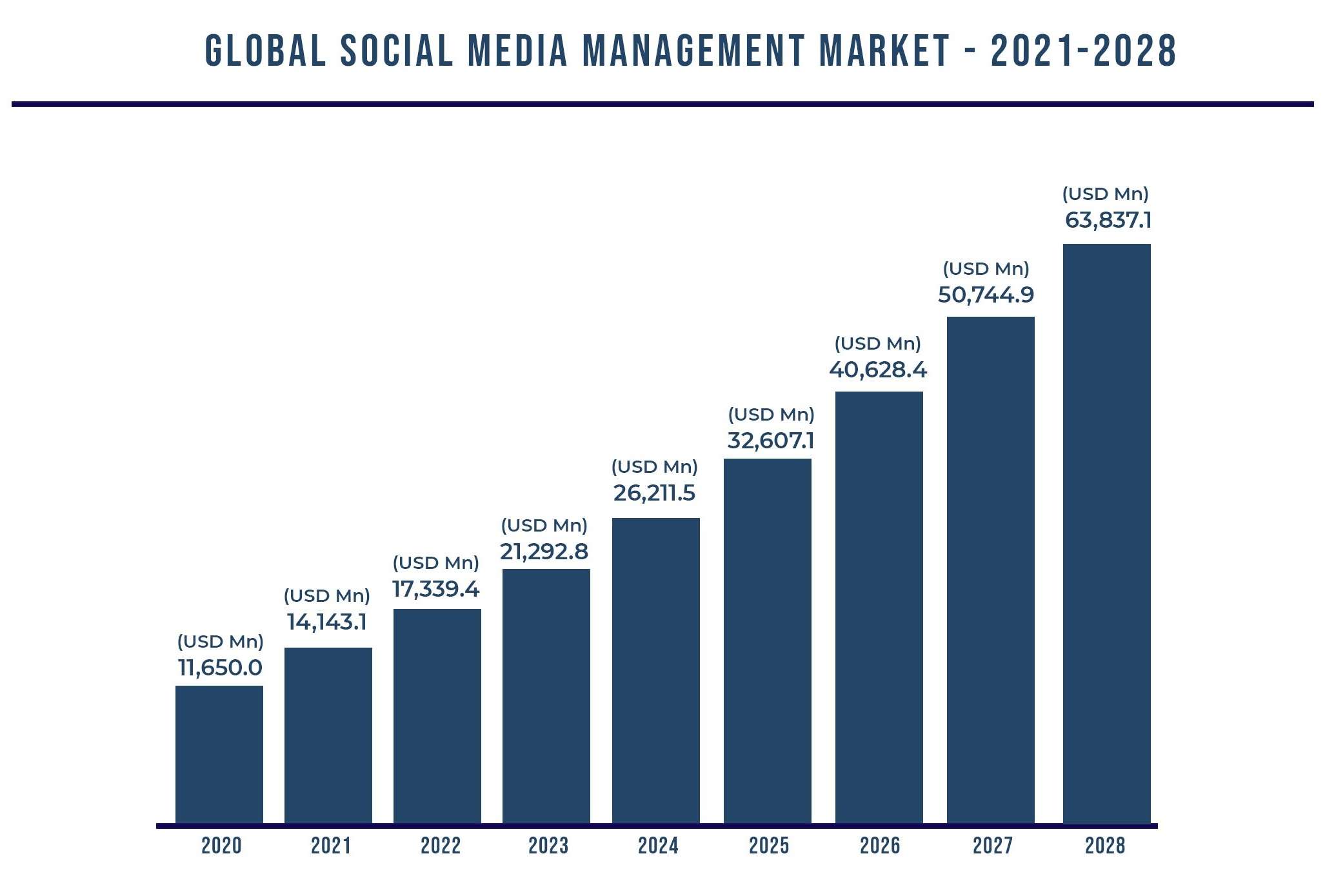
Global Social Media Management Market Size Forecast 2020-2028
The Global Social Media Management Market is poised for significant growth between 2020 and 2028, driven by the increasing importance of social media marketing in business strategies worldwide.
As companies recognize that a robust online presence is essential to engage with their audience, they are ramping up investments in sophisticated tools designed to streamline content creation, scheduling, and performance analytics across various platforms.
The surge in user-generated content and the expansion of digital advertising have prompted businesses of all sizes—from startups to established enterprises—to harness social media marketing as a vital means of customer engagement and brand development.
Moreover, advancements in artificial intelligence and machine learning further refine how organizations analyze consumer behavior on social networks, allowing for more targeted campaigns to maximize reach while minimizing costs.
With an ever-growing number of users engaging through diverse channels—from traditional giants like Facebook to emerging platforms like TikTok—the market landscape continues to evolve rapidly, creating challenges and opportunities for those skilled in navigating this complex digital arena.
Conclusion
Creating a winning social media marketing strategy involves several vital components. By understanding the importance of social media for businesses, you can capitalize on its vast reach and engagement potential.
Knowing your target audience allows you to tailor content that resonates with them, increasing interaction and brand loyalty.
Setting clear goals ensures that your strategy remains focused and measurable. Whether it’s boosting brand awareness or driving sales, having specific objectives will guide your efforts effectively.
Choosing the right platforms is equally crucial; not all networks suit every business type. Identify where your audience hangs out and concentrate your resources there.
Adapting and evolving your approach keeps things fresh in an ever-changing digital landscape. Trends shift quickly in social media marketing, so staying agile helps maintain relevance.
By integrating these elements into a cohesive strategy, businesses can harness the power of social media marketing to achieve remarkable results.
The journey may require ongoing adjustments, but ultimately, it leads to growth and success in reaching new audiences while building lasting relationships with existing customers.
