
SEO Services
YouTube SEO Package for Service Brands: When Optimization Beats Paid Promotion
Sep
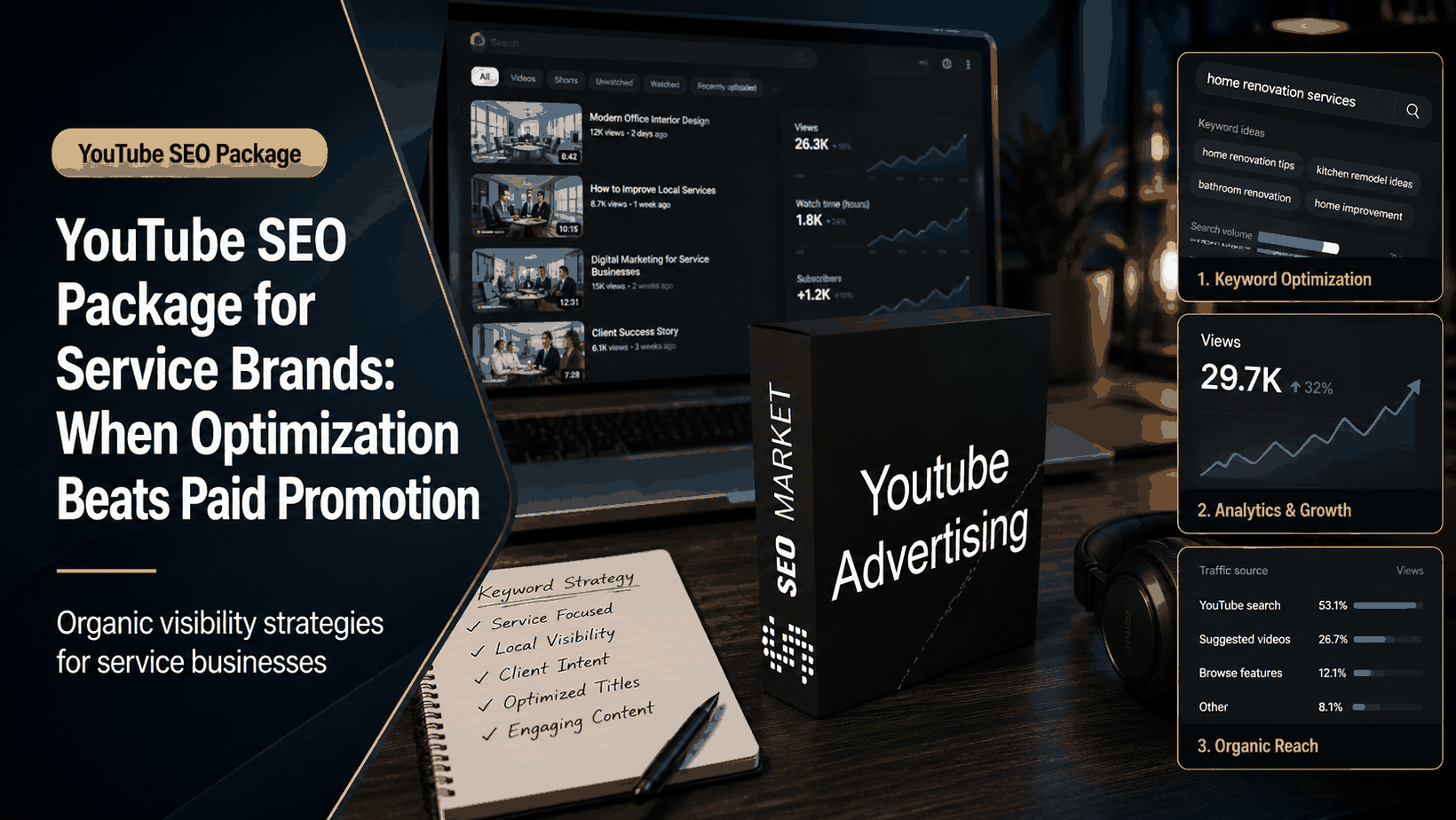
YouTube SEO Package is most useful when it is judged against a clear business objective, a transparent method, and evidence that can be checked after the work is completed. This guide is written for service brands using youtube to generate qualified leads who want to compare the service without confusing activity, third-party metrics, or promotional claims with guaranteed search results.
The decision should begin with the current baseline and the outcome the business actually values. Ask what the provider controls, what depends on search engines or platforms, what requires client input, and what would cause the plan to change. That approach makes YouTube SEO Package easier to evaluate on quality and fit rather than on the size of the package.
How To Evaluate YouTube SEO Package
Video optimization starts before upload. Search intent, audience questions, proof points, recording structure, and the promise in the title all affect whether the right viewer clicks and keeps watching.
Metadata can improve context, but it cannot compensate for a weak topic or poor retention. Service brands should connect each video to a real customer question, a useful next step, and a landing page or enquiry path where appropriate.
Compare organic optimization with promotion by objective. Paid reach is useful for fast exposure and controlled targeting, while search-oriented optimization compounds only when the content continues to satisfy viewers.
Scope, Quality, and Evidence
Define the Deliverable
Use YouTube keyword optimization to test whether the provider can define the deliverable precisely, explain what is included, and show how the work supports the actual audience rather than a generic campaign label.
Verify the Baseline
For video metadata SEO, ask what baseline is recorded before work starts and which evidence will be available afterward. A useful answer should describe source data, method, frequency, and any assumptions that could change the result.
A buyer should be able to explain the tactic in plain language after the proposal call. If the method only makes sense when a proprietary score or vague promise is accepted without evidence, the scope needs more detail.
Inspect Quality Before Scale
Treat YouTube channel discoverability as a quality checkpoint instead of a sales phrase. Review relevance, ownership, review standards, and whether the tactic remains useful if a third-party metric or platform feature changes.
Connect Activity to the Business
When considering video search ranking tactics, connect the activity to a specific page, service, location, or conversion path. This prevents a campaign from producing activity that looks busy but does not support a business objective.
Ask who owns the accounts, content, domains, creative files, tracking setup, and reports created during the engagement. Ownership becomes especially important when a campaign is paused or moved to another provider.
Measure Outcomes Properly
A proposal involving YouTube description optimization should include a measurement method. Decide in advance which first-party or platform indicators will show progress, and separate completed tasks from outcomes that no provider directly controls.
Protect Long-Term Value
Before scaling service brand video marketing, request a representative sample or a small controlled phase. Early evidence can reveal relevance, quality, tracking gaps, or policy risk before the full budget is committed.
Quality assurance should be defined before production starts. Written acceptance rules make it easier to reject weak placements, duplicate content, inaccurate business data, low-quality traffic, or off-brand publishing before those items accumulate.
Comparison Framework
Compare competing proposals with the same criteria. A smaller transparent scope can be more valuable than a larger package when the smaller plan explains the method, provides evidence, and targets the pages or audiences that matter most.
| Area | What to Review | Evidence to Request |
|---|---|---|
| Topic selection | Matches a service question and audience intent | Search demand plus sales-team evidence |
| Title and thumbnail | Clear promise without clickbait | CTR alongside retention |
| Description | Unique summary and useful links | Accurate first lines and natural keywords |
| Channel structure | Playlists, related videos, consistent themes | Navigation and session depth |
| Measurement | Discovery plus lead quality | Search terms, watch time, actions |
A comparison sheet should also record exclusions, client dependencies, cancellation terms, and the time required for approvals. Those operational details often determine whether a theoretically good strategy can actually be implemented.
Implementation and Measurement
Start with a controlled sequence. Establish the baseline, fix obvious blockers, complete the highest-confidence work, verify tracking, and then scale what is producing useful signals. This makes it easier to separate correlation from changes that can reasonably be connected to the campaign.
Pre-Launch Checklist
- Identify five high-intent customer questions
- Map one service or offer to each video
- Write a unique title and description
- Improve the opening 30 seconds
- Add useful chapters where appropriate
- Build relevant playlists
- Track search terms and retention
- Compare leads from organic and paid video
Reporting should explain decisions, not just totals. Useful reports show what changed, where the evidence came from, what improved or declined, what remains uncertain, and which action is recommended next.
Risks and Red Flags
- Guaranteed rankings or fixed outcomes without conditions
- No disclosure of method or representative examples
- Reporting that shows only activity or a single third-party metric
- Assets or accounts that the client cannot access
- No rejection standard for low-quality work
- Scaling before measurement and quality checks are working
A video package is weak when it promises rankings through metadata alone, copies descriptions across uploads, stuffs tags, or reports views without showing how the audience found and used the content.
Optimization should not turn every title into a keyword string. Service brands still need accuracy, credibility, visual quality, and a useful viewing experience.
For YouTube SEO Package, the safest buying standard is simple: require a method that can be explained, evidence that can be reviewed, and a result framework that does not depend on promises outside the provider’s control.
Choosing The Right YouTube SEO Package
YouTube SEO Package should fit the website’s current stage, audience, risk tolerance, and measurement capability. Choose the proposal that connects deliverables to a clear objective and makes quality visible before the campaign is scaled.
Keep the baseline, samples, approvals, and reports in one place. That documentation makes it easier to judge progress over time and to change direction when search data, platform rules, or business priorities change.
Frequently Asked Questions
What should a YouTube SEO Package include?
It should define the exact deliverables, quality standards, timing, ownership, reporting, exclusions, and the business goal each workstream is intended to support.
Can YouTube SEO Package guarantee the advertised outcome?
No provider controls search engines, platform algorithms, competitors, user demand, or every implementation dependency. Evaluate controllable deliverables and evidence rather than guaranteed positions or scores.
What evidence should a buyer request before ordering?
Ask for representative samples, baseline data, quality criteria, source transparency where appropriate, reporting examples, and a clear explanation of how weak or unsuitable work is rejected.
How should progress be measured?
Use several indicators together: first-party traffic and conversion data, search visibility, page-level performance, relevant referring domains or platform metrics, and completed technical or content improvements.
What is the most important red flag?
A provider that will not explain its method or relies on guaranteed outcomes creates unnecessary risk. A credible plan should make scope, evidence, ownership, and limitations easy to understand.
